
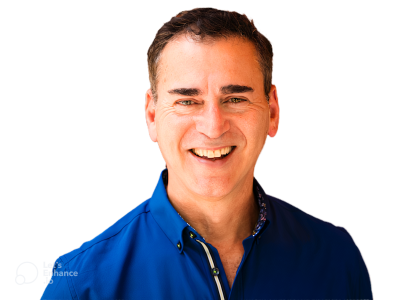
I’ve been where you are.
I understand firsthand how depression can reduce your existence to the size of your bedroom, leaving you too exhausted to work, too wired to sleep, and too defeated to hope. Ketamine therapy changed everything, bringing me to complete remission in just six weeks. Read about my journey here →
I want the same thing for you. With clinical research showing high remission rates, you have a real shot at getting rid of the darkness, not just managing its symptoms.
My mission is simple:
To be your guide, the advocate I never had. I’m here to give you everything you need—straightforward information, actionable insights, and a clear path forward—so you can make an informed decision about therapy with ketamine.
I’m not a doctor. I’m not a mouthpiece for Big Pharma. I don’t sell anything. I don’t accept ads. I don’t get paid by anyone for anything. My mission is to save lives and ease suffering, and this website is the base camp where that mission begins.
I’ve created a simple, step-by-step guide to move you from curiosity to clarity:


What You Need To Know About Ketamine Treatment
What Is It?
Low-dose anesthetic given by IV, injection, nasal spray, in a medical clinic. At-home oral ketamine also an option.
How Does It Work?
Physically repairs brain structure and rebuilds connections between cells.
How Is It Different?
No daily pills, no long-term side effects—can bring remission within months.

When I first heard about ketamine treatment, I was lost.
I didn’t know where to begin, let alone how to sort through the flood of questions. What even is ketamine for depression? A pill? A procedure? How much does it cost? Does insurance cover it? What’s the difference between ketamine infusion therapy and the esketamine nasal spray? Every answer seemed to lead to more questions, and the resources I needed felt just out of reach, buried in a maze I had no map for.
Every step felt overwhelming, and I kept thinking, Why isn’t there someone who can help me figure this out? Someone who’s been through it, who knows the frustrations, the dead ends, and the questions you don’t even know to ask yet. That’s why I created this website—not to drop a pile of information at your feet and leave you to sort through it, but to be the ketamine treatment guide I wish I’d had.
I’ve broken everything down so you can go from confused to confident without feeling overwhelmed.
What Ketamine Offers That Other Treatments Don’t
Evidence-backed outcomes that go beyond symptom management
FAR HIGHER Remission RATES THAN SSRIs
Can put depression in remission—not just manage symptoms.
Works Quickly
Complete remission within weeks is possible with IV Ketamine—even for treatment-resistant cases.

When I first heard about ketamine treatment, I was lost.
I didn’t know where to begin, let alone how to sort through the flood of questions. What even is ketamine for depression? A pill? A procedure? How much does it cost? Does insurance cover it? What’s the difference between ketamine infusion therapy and the esketamine nasal spray? Every answer seemed to lead to more questions, and the resources I needed felt just out of reach, buried in a maze I had no map for.
Every step felt overwhelming, and I kept thinking, Why isn’t there someone who can help me figure this out? Someone who’s been through it, who knows the frustrations, the dead ends, and the questions you don’t even know to ask yet. That’s why I created this website—not to drop a pile of information at your feet and leave you to sort through it, but to be the ketamine treatment guide I wish I’d had.
I’ve broken everything down so you can go from confused to confident without feeling overwhelmed.
What Does A Ketamine Session Feel Like?
In The Beginning
Pain disappears, deep relaxation, mind-body separation—you’ll feel light, almost floating.
At The Peak
Time and space distort—dreamlike, otherworldly, sometimes spiritual or psychedelic visions appear.
Toward The End
Slowly waking from a dream—emergence phenomena, buried memories—then calm but groggy.
What Does Ketamine Therapy Cost?
Spravato Nasal Spray
Least effective but still powerful—~$250 per session with insurance.
How Many Ketamine Sessions Will You Need?
Injection Ketamine
11-18 sessions over 6 months—schedule varies by provider and response.
Spravato Nasal Spray
FDA-approved protocol is 21 sessions over 6 months. But clinical practice shows it’s closer to 25 sessions (and even up to 35+ for hard to treat cases).
Are You a Candidate for Ketamine Therapy?
You Must Be…
Diagnosed With Depression
For IV/injection/Oral: Any form of depression. For Spravato: Treatment-resistant depression.
Medically Eligible
No uncontrolled hypertension, active psychosis, mania, substance use issues and other limitations.
Able To Take Time Off Work/Child Care
At least half-day commitment per session (up to 18 for IV; up to 35+ for Spravato.
Find a Ketamine Clinic That’s Close to You
Take the first step toward putting your life back together
Ketamine Therapy for Depression: Frequently Asked Questions
Why is ketamine therapy different from antidepressants—and why does it work so much faster?
Ketamine therapy is different from antidepressants—and works faster—because it repairs the brain’s structure instead of altering brain chemistry. SSRIs work by increasing serotonin levels, which may slowly improve mood over time, but ketamine immediately crosses the blood-brain barrier, triggers a glutamate surge, and begins restoring damaged neural circuits. That physical repair process begins within hours, not weeks.
Antidepressants can take 4 to 8 weeks because they rely on indirect, downstream changes that slowly influence brain connectivity, if at all. Ketamine skips that delay by directly activating BDNF, reorganizing brain networks, and promoting the growth of new connections between cells.
Patients often feel sharper, calmer, and more emotionally regulated after their first or second session—not because of chemical mood shifts, but because their brain is functioning differently. This treatment does not reset brain chemistry; it rebuilds the brain’s communication systems. The difference isn’t subtle. The speed comes from structural change, not chemical modulation.
Will I feel high, out of control, or scared during ketamine treatment—or is it more calm and contained than people expect?
The overwhelming majority of patients describe ketamine treatment as calm and contained regardless of how intense the session gets. That’s because ketamine creates a dissociative state where you feel physically and psychologically safe, even while accessing fear, grief, or trauma. The drug suppresses the default mode network and blocks NMDA receptors, which interrupts ordinary thought patterns and opens the door to subconscious material.
Some people do have vivid psychedelic visions, but many do not. What’s consistent is the strange emotional distance ketamine creates: you might relive painful memories or see disturbing imagery, but from behind a kind of glass. You can feel fear without panic, sadness without collapse. This buffer is what makes the experience manageable—not the absence of emotion, but the detachment from it.
The treatment setting is also quiet, structured, and closely supervised. Most patients feel groggy, introspective, or emotionally raw afterward—but not unsafe, not out of control. The power of the experience comes from what surfaces, not from how wild it gets.
What’s the difference between IV ketamine and Spravato (the esketamine nasal spray)—and is there scientific evidence that one works better for depression?
Spravato is FDA-approved only for patients with treatment-resistant depression who’ve failed at least two prior antidepressants, and it must be administered in a REMS-certified clinic under strict supervision. IV ketamine is off-label but backed by decades of research, isn’t limited to REMS facilities, and is available to patients with a broader range of diagnoses—including major depression, bipolar depression, persistent depressive disorder, and seasonal affective disorder—regardless of how many medications they’ve tried.
IV ketamine is racemic ketamine—both R- and S-ketamine—administered by infusion. Spravato is esketamine, the S-isomer only, delivered through a nasal spray. IV dosing is based on body weight and can be precisely adjusted between sessions to optimize response and minimize side effects. Spravato comes in two fixed doses—56 mg and 84 mg—regardless of weight or sensitivity.
IV delivers 100% of the medication into your bloodstream. Spravato averages 48% bioavailability, with variability caused by nasal congestion or spray technique.
There are no head-to-head trials, but systematic reviews and meta-analyses comparing each treatment to placebo found that IV ketamine is up to five times more effective than Spravato at reducing depressive symptoms and 2.5 times more likely to bring patients into remission.
What are the different ways to take ketamine—and how do I choose the right one?
Ketamine is typically delivered through IV infusion, intramuscular (IM) injection, esketamine nasal spray (Spravato), or oral/sublingual forms. Each method has major trade-offs in effectiveness, cost, and accessibility.
IV infusion is the most effective and fastest-acting, with nearly 100% bioavailability and real-time dose control. But it’s always self-pay and often runs $400–$800 per session. IM injection is more affordable than IV and works faster than the nasal spray, but it offers less dosing flexibility. Spravato is FDA-approved and partially covered by insurance, but out-of-pocket costs can still exceed $8,000 without the manufacturer’s subsidy. It’s slower to work, less effective than IV, and requires treatment at a REMS-certified clinic.
Oral and sublingual forms are the least effective and slowest acting. They’re also less researched and carry more risk due to inconsistent absorption.
Choosing a method isn’t just about preference. It often comes down to real-world barriers: cost, insurance coverage, clinic access, and how quickly you need relief.
Is ketamine therapy covered by insurance—and what will I have to pay out of pocket?
Ketamine therapy is not covered by insurance—except for Spravato, the esketamine nasal spray. IV infusions and injections are considered “off-label,” so they are excluded from coverage by commercial insurance, Medicare, and Medicaid. Spravato, by contrast, is FDA-approved and at least partially covered by most commercial insurers. Medicare covers it under Part B, and Medicaid covers it in many states, though eligibility varies significantly.
Despite this coverage, ketamine remains a very expensive treatment across the board—with or without insurance—unless you qualify for the substantial manufacturer subsidy, which requires commercial insurance that already covers Spravato. Without insurance, the 14-session Spravato protocol costs about $24,000. With coverage, your out-of-pocket cost typically ranges from $7,691 to $9,451 depending on your deductible, copays, and coinsurance.
IV ketamine and injection therapy cost less—around $6,000 and $3,380 respectively for a full protocol—but must be paid entirely out of pocket.
How Can You Be Sure Ketamine Therapy Actually Works?
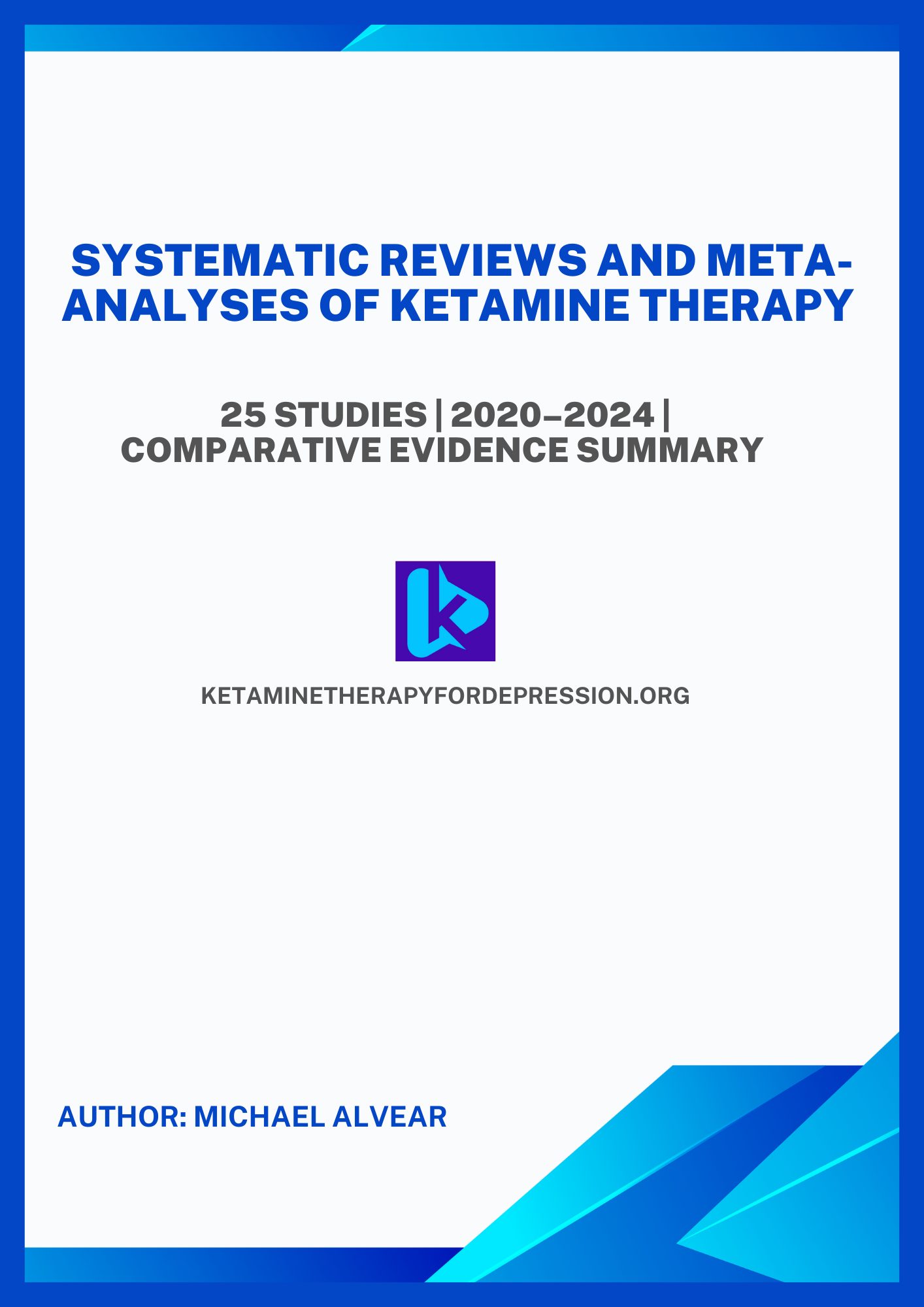
I pulled together 25+ systematic reviews from the last five years into one report—so you don’t have to rely on hype, guesses, or anecdotes. This is the highest level of real-world evidence we have.
Inside My Report You’ll Find
- What percent of patients enter remission—broken down by delivery method
- Which method is most effective—IV, injection, or Spravato nasal spray
- How fast ketamine can work to reduce or end symptoms
- Which combinations (like psychotherapy) may enhance response
- And a lot more…
Verified by the Platforms That Matter
This research summary report has been published across four trusted platforms that host peer-reviewed or open science content, including:
– Published ketamine research on Zenodo
– Ketamine evidence summary hosted on SSRN
– Scientific report on ketamine outcomes on Figshare
– Evidence-based ketamine therapy report on OSF
View the PDF Report Here: